Miss Diagnosed
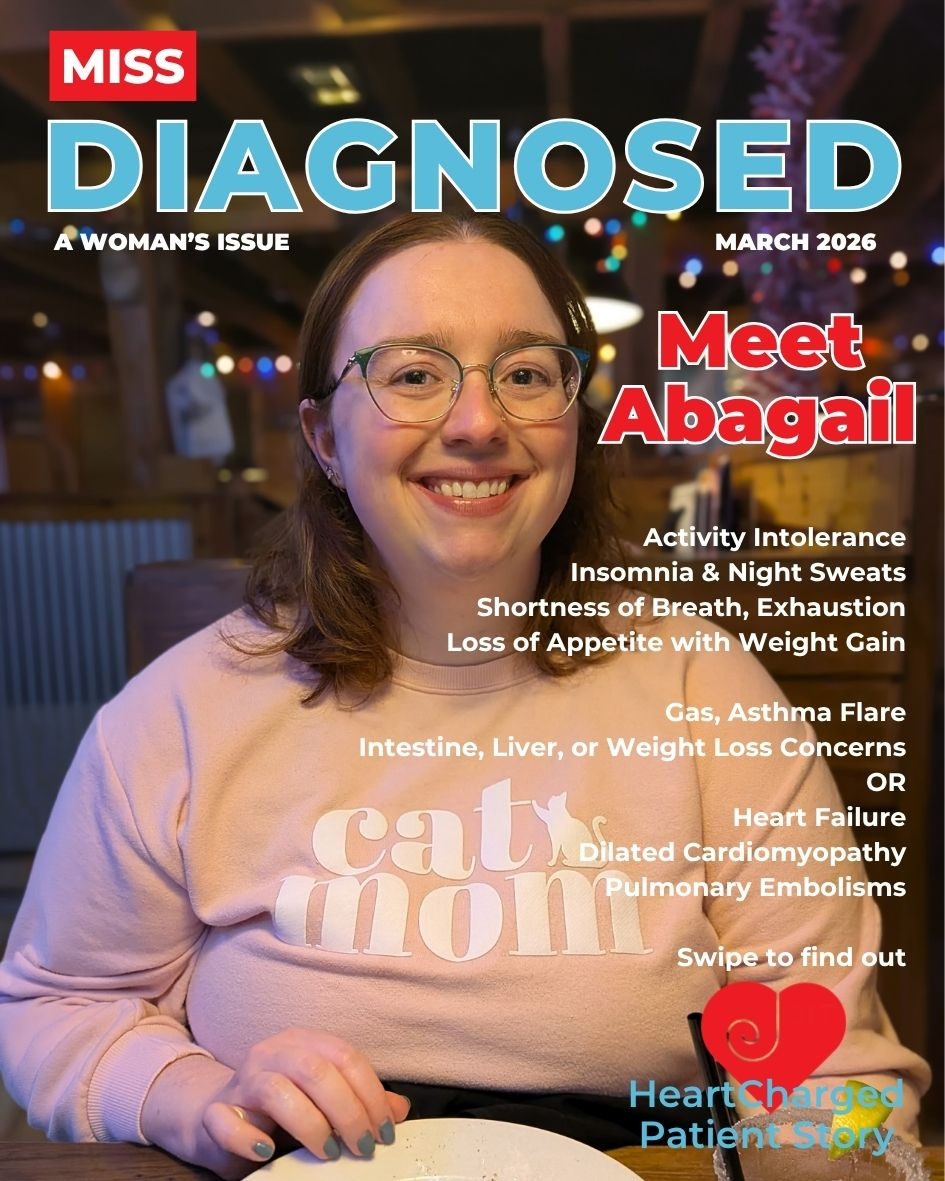
Meet Abagail
At 28, Abigail’s shortness of breath, exhaustion, abdominal symptoms, and weight gain were initially attributed to gas, asthma, SIBO, and fatty liver. She was ultimately diagnosed with severe heart failure, a 9% ejection fraction, and two pulmonary embolisms. After receiving a CRT-D and completing cardiac rehabilitation, Abigail now encourages women to trust their bodies and advocate for answers.
Patient Story Misdiagnosed
When It Started
Hi, my name is Abigail!
One day when I was 28, I woke up with a stomach ache. I was nauseous, belching, and had no appetite.
At the same time, I was getting short of breath while moving. I was exhausted from walking around at my job, and climbing the stairs at my third-floor walk-up became impossible.
When I went to the doctor, she thought it sounded like gas and an asthma flare. I tried gas medications, but my symptoms kept getting worse.
I still couldn’t breathe, and now I couldn’t lie flat at night and barely slept. If I did sleep, I would wake up drenched in sweat.
I was working every day and couldn’t move without being miserable.
My weight was creeping up even though I was hardly eating.
At my next appointment, my doctor said I had SIBO—small intestinal bacterial overgrowth—and gave me antibiotics.
I begged her to do more, and she ordered a chest X-ray and bloodwork. I am a medical laboratory scientist, so when I saw my liver enzymes in the upper hundreds, I knew something was very wrong.
My doctor recommended I go to the ER for more workup since this had been going on for over three weeks.
After more scans, bloodwork, and an EKG, the ER doctor told me that she suspected I had fatty liver and that the solution was weight-loss surgery.
The Real Diagnosis
I was admitted overnight and the hospitalist ordered more tests.
I saw my BNP was 3171 and knew what that meant from working in the lab. I was in heart failure.
That morning I had an echo done and received the results on my phone. EF = 9%, meaning my ejection fraction was at 9%.
When I Googled this, the first thing I saw was “preparing for a heart transplant” and ads for hospice.
The rest of that day is a blur of tests, IV medication, a lot of doctors, and being transferred to a larger hospital’s cardiac unit.
Every medical staff member I interacted with was shocked to see me awake in bed. I was talking and laughing like nothing was wrong.
I felt like a living ghost.
I learned that I didn’t have fatty liver.
I had severe heart failure and two pulmonary embolisms.
I lost 30 pounds of fluid in the hospital. One week and one LifeVest later, I was discharged to my new life.
Six months after my diagnosis, I got a CRT-D—also known as a biventricular pacemaker/defibrillator—and completed cardiac rehabilitation.
I feel more confident in my body, and I’m not as scared of my traitorous heart.
The cause of my heart failure is unknown, but I won’t dwell on it. I can do everything I want to do, and I’m working on making my body stronger.
Living With the Aftermath
I recognize my Heartiversary every year with a vacation with my fiancé, who called my bluff when I told him to leave me and stayed by my side.
My experience left me with medical PTSD, and the LifeVest’s unpredictable alarms gave me sleep problems.
I do sometimes wonder: If my bloodwork had been done earlier, would my heart have gotten so weak? Would I have gotten pulmonary embolisms?
Trust Yourself
I’m sharing my story to encourage women to trust themselves.
Be annoying!
You know your body best. You know when something is wrong.
Providers, investigate cardiac causes of shortness of breath and abdominal pain in young women.
Don’t assume that weight loss will solve the problem.