Miss Diagnosed
Meet Stephanie
After decades of tachycardia, syncope, breathlessness, and difficulty managing stairs, Stephanie’s symptoms were repeatedly attributed to stress, indigestion, and being out of shape. She was finally diagnosed with HCM after two of her daughters received diagnoses, inspiring her to advocate for family-history screening, patient voices, and the prevention of sudden cardiac death.
Patient Story Misdiagnosed
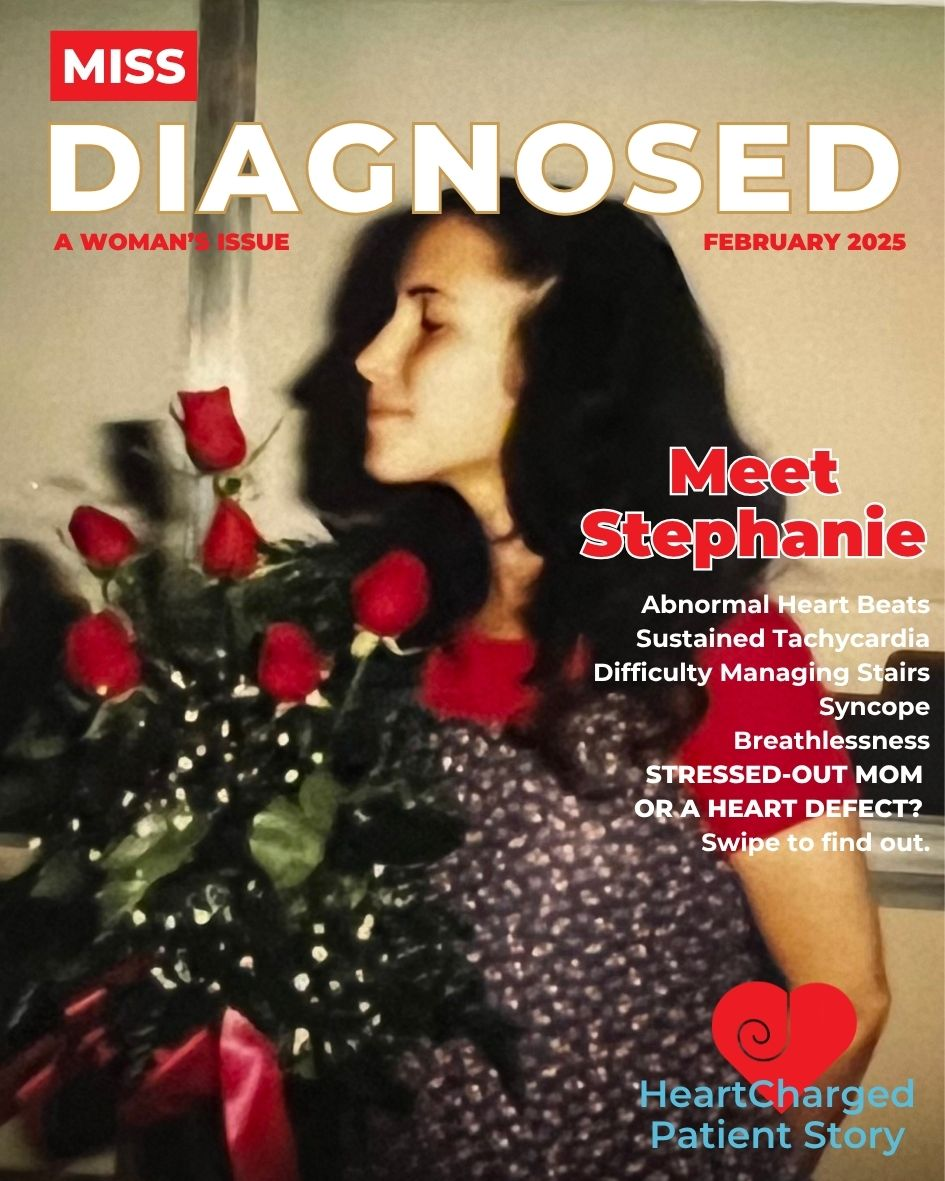
Abnormal heartbeats · Sustained tachycardia · Difficulty managing stairs · Syncope · Breathlessness
Stressed-out mom—or a heart defect?
Stephanie’s Story
Hi, my name is Stephanie.
From 1980 until 2003, I was basically pregnant or nursing a baby. I had 10 pregnancies and 9 children during that time—six boys, then three girls.
People certainly said my children, coupled with my addiction to volunteerism and work, could cause a lot of stress, but that was my normal.
No one said I had an abnormal heart.
Looking back from the other side of a diagnosis, and now knowing what the warning signs of hypertrophic cardiomyopathy (HCM) are, I realize I exhibited a number of them.
I remember feeling like my heart wasn’t right, my heartbeats were off, and that I was going to slip away.
I thought I was nuts and don’t recall really sharing this with anyone except God. I would pray, “God, I cannot trust my husband to raise these kids himself. Don’t take me yet.”
Symptoms Dismissed as Stress
I repeatedly had episodes of sustained tachycardia and repeatedly thought I could use mind-control powers to slow my heart down.
Yeah, that didn’t work.
So repeatedly I went to the emergency room.
Whatever stress I had at home was nothing compared to being told it was indigestion or the aforementioned stress, as if that changed on a daily basis.
My legs would—and still do—feel like lead weights when I climbed stairs.
We’re always told that it’s because we’re out of shape, so I took the blame on myself even though I climbed those stairs several times a week.
I still recall my syncope episodes and often wondering about the silver slivers floating in front of my eyes.
I took the blame for getting up too fast. That’s an easy explanation.
I mean, I got up too fast while having a chronic heart condition, but po-tay-toes, po-tah-toes—what’s the difference?
Finally Receiving a Diagnosis
Over the years, I saw several cardiologists who never gave me a diagnosis and simply put me on medication.
Do you think I didn’t give them enough information to make a diagnosis with? Like saying my sister got diagnosed with HCM.
It’s not like it’s genetic. Oh, wait—yes, it is, about 50% or more of the time.
Hate to get off topic here, but why do they ask about family medical history at doctor appointments?
I didn’t get diagnosed until two of my daughters were diagnosed with HCM in their teens, and their phenomenal pediatric cardiologist did an echo of my heart and told me I had it as well.
She also made sure I got treatment because, as she said about me:
“She’ll never go get treatment on her own when she has to worry about her kids.”
If I had been diagnosed earlier—which seemingly shouldn’t have been difficult, as I had six of the seven most common warning signs—my children could have been diagnosed and treated earlier.
As it is, one of my daughters suffered a sudden cardiac arrest just a few years after her diagnosis, and her implanted defibrillator saved her life.
Advocacy and Awareness
So here’s to thinking I was flipping insane—and my use of limited financial resources to confirm it—for decades while having a chronic and deadly genetic heart defect.
Now people think I’m insane because I spend much of my time talking about the warning signs, patient advocacy, and trying to stop preventable deaths.
I’m sharing my story mostly because my daughters, Bethany and Hannah, insisted, but also to tell others: I understand you, and I’m sorry if you were made to question yourself.
I know we can accept a diagnosis, as I know not knowing is its own kind of hell.
Here’s to knowing and treating heart conditions.
Here’s to us, as a society, putting an end to accepting hundreds of thousands of preventable deaths each year from sudden cardiac arrest alone.
And here’s to mental health and community for survivors.
Join the movement I’m part of.
Get HeartCharged!