Miss Diagnosed
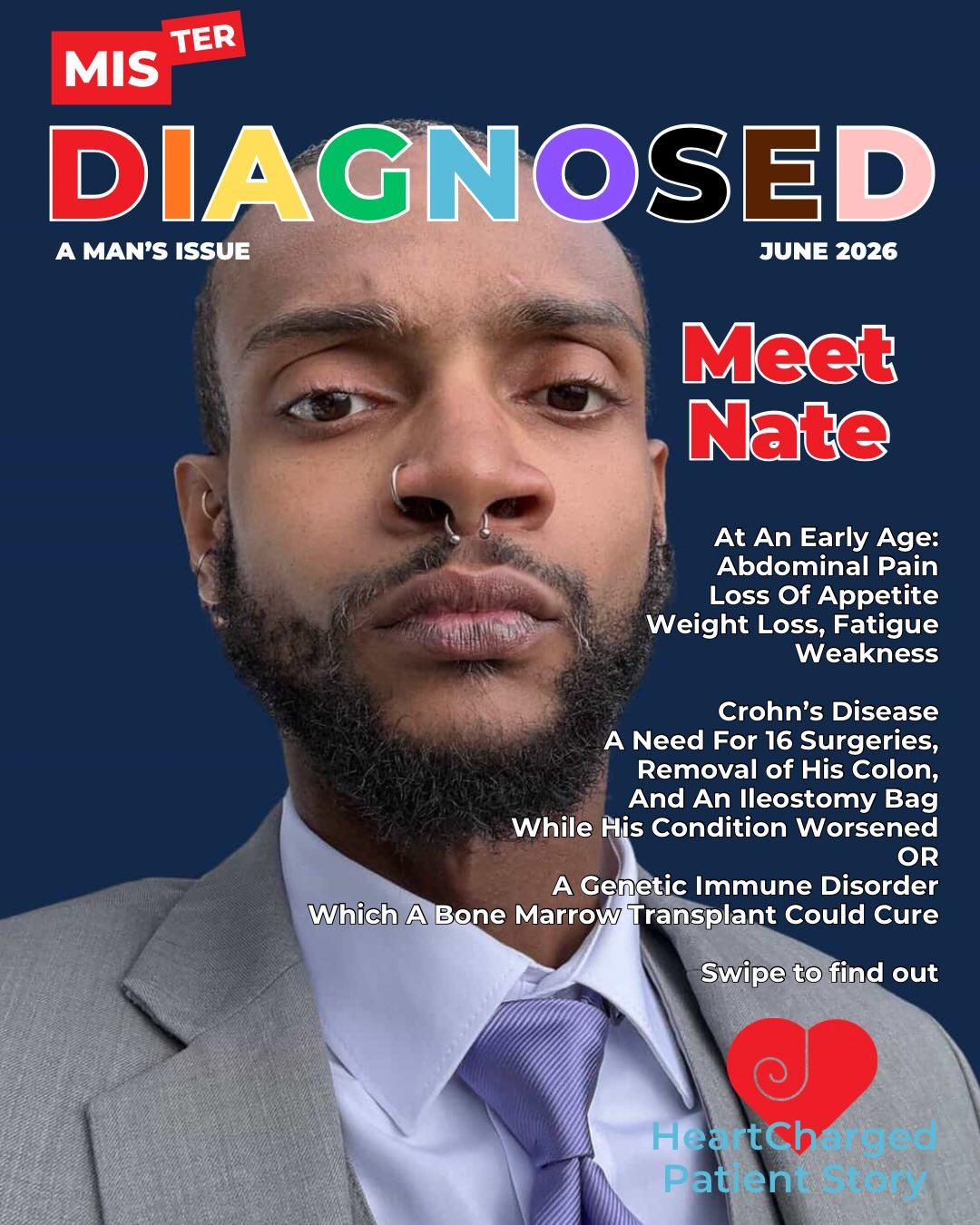
Meet Nate
Nate was misdiagnosed with Crohn’s disease for 12 years and underwent 16 surgeries before genetic testing revealed HLH, a rare immune disorder caused by an XIAP mutation. Now, after a life-saving bone marrow transplant, he advocates for earlier diagnosis, genetic testing, and greater equity in healthcare.
Patient Story Misdiagnosed
Early Symptoms
Hi, my name is Nate.
When I was young, I began experiencing symptoms such as severe abdominal pain, loss of appetite, weight loss, fatigue, and weakness.
I was misdiagnosed with Crohn’s disease at 7 years old, which shaped every aspect of my care and life for 12 years.
Over the next decade, my condition worsened and I was misdiagnosed with Crohn’s at 2 additional well-resourced institutions, after seeking a second opinion.
I underwent 16 surgeries, including 13 in 14 years, ultimately leading to the removal of my colon and an ileostomy bag, all in an effort to treat a disease I didn’t actually have.
When the Condition Worsened
At 19, I developed two bowel obstructions a week apart from each other.
After the revision surgery for my second obstruction, I developed a severe infection and became septic.
I was placed in the Johns Hopkins PICU with organ failure where I experienced ICU delirium.
A new PICU physician on my case felt that my present symptoms did not align with those they see in Crohn’s patients and decided to utilize their team to look into other possibilities, which soon led to the first introduction of genetic testing.
My test results came back showcasing I had Hemophagocytic Lymphohistiocytosis (HLH), a rare and life-threatening immune disorder caused by a mutation in my XIAP gene that occurred at birth.
Finding the Correct Diagnosis
If not for that test, I may not be here today.
The delay in diagnosis nearly cost me my life.
It led to years of unnecessary procedures, medical trauma, and irreversible physical changes.
I am forever grateful that after 12 years of fighting, I happened upon someone who truly saw me and had the consideration to take a step back and think outside of the box.
With the correct diagnosis, my care team created a plan to save me: stabilize the infection, undergo chemotherapy, and receive a bone marrow transplant, which for me was the only chance at survival.
“I reviewed the patient’s medical records, verified key portions of the history and performed a physical examination. After that, I spent 1 hr in a meeting with the primary team in the PICU, hematology, and oncology. We agreed with a tentative plan by the surgeons to place a skin graft to allow them to close the abdomen in about a week. Whether or not that works, he will need to be started on chemotherapy to treat HLH, with the aim of trying ultimately to get him to a bone marrow transplant. We all agreed that this was a very high risk for him, but probably his only chance for survival.”
—Hopkin’s Physician
A Second Chance
That transplant saved my life.
I’m sharing my story to raise awareness about the dangers of misdiagnosis, the importance of listening to patients, and the urgent need for earlier access to genetic testing, especially for rare diseases and especially for people of color.
I’m also sharing this to highlight the disparities that exist in healthcare.
My pain was often minimized, and today, African Americans still have the lowest chance of finding a life-saving bone marrow donor match.
Now, I use my second chance to advocate for others, working to improve rare disease policy, increase equity in healthcare, and ensure no one else has to endure what I did.
Call to Action
Listen to patients. Push for answers. Support rare disease research.
And if you’re able, join the bone marrow donor registry at nmdp.org.
You could save a life.