
Miss Diagnosed
Meet Charlie
Charlie experienced dizzy spells, breathlessness, fainting, exercise intolerance, and severe infections from childhood, but her symptoms were repeatedly attributed to stress, asthma, poor diet, or psychological causes. Eighteen years after her first hospitalization, she was finally correctly diagnosed and treated.
Patient Story Misdiagnosed
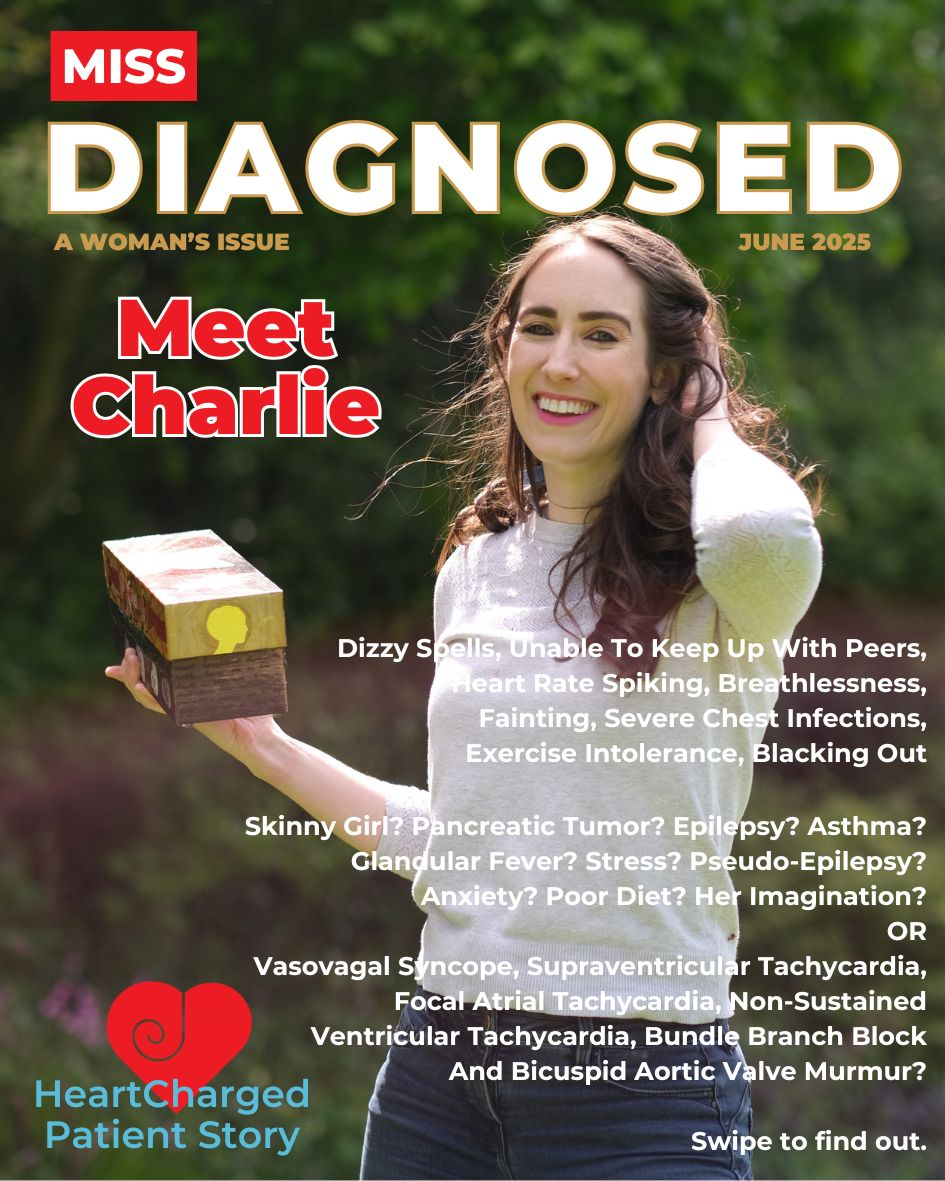
Symptoms: Dizzy spells, inability to keep up with peers, heart-rate spikes, breathlessness, fainting, severe chest infections, exercise intolerance, and blacking out.
Skinny girl? Pancreatic tumor? Epilepsy? Asthma? Glandular fever? Stress? Pseudo-epilepsy? Anxiety? Poor diet? Her imagination?
OR
Vasovagal syncope, supraventricular tachycardia, focal atrial tachycardia, non-sustained ventricular tachycardia, bundle branch block, and bicuspid aortic valve murmur?
Charlie’s Story
Hi, my name is Charlie. When I was in primary school, I started having dizzy spells and couldn’t keep up with my peers during exercise. Doctors dismissed it, saying I was just a “skinny girl” who wasn’t good at PE.
By age 19, I was blacking out regularly, and a 5-minute walk to class took me 20 minutes. I was told it was due to glandular fever, stress, or poor diet.
After my first hospitalization, I was placed on a neurology pathway and investigated for epilepsy. When tests were clear, a neurologist suggested pseudo-epilepsy, a psychological condition.
I was referred to endocrinology to check for a pancreatic tumor, which was ruled out.
Believing my condition might be “imaginary,” I embraced strict lifestyle changes and alternative therapies. This helped me run a 5K, but it took nearly an hour with my heart rate spiking between 190–240 bpm.
I fainted 10–12 times a year when healthy, more when sick, and battled frequent infections.
Finally Diagnosed
As breathlessness and exercise intolerance worsened, coupled with more severe chest infections, I was referred to respiratory care and treated for asthma for four years, despite no improvement.
I insisted on a lung CT scan, which showed lung function comparable to someone decades older, but no asthma.
After pregnancy, my symptoms intensified to daily breathlessness, dizziness, and fatigue. My GP suggested anxiety, but a psychiatrist refused to treat me until physical causes were ruled out.
Frustrated, I paid for a private cardiology consultation. Around the same time, my child began to display global developmental delay, prompting doctors to re-examine my history.
Eighteen years after my first hospitalisation, I was correctly diagnosed and treated.
The Consequences of Delayed Diagnosis
The delayed diagnosis didn’t worsen my benign condition, but the consequences were significant. Fainting caused multiple broken ribs, a broken collarbone, a near-miss traffic accident as a pedestrian, job losses, and strained relationships.
It also restricted my ability to drive for years. Medications for incorrect diagnoses caused unpleasant side effects, though these resolved.
The biggest loss was time. I spent my late teens and 20s struggling with medical uncertainty while my peers built careers and families.
We’re still exploring whether my condition impacted my child, which is a heavy burden.
A Message to Other Patients
I’m sharing my story to encourage others to advocate for themselves, even when medical professionals dismiss their concerns.
My call to action: Don’t lose faith in medicine. Approach your condition systematically, rule out possibilities one by one, and find someone to support you through this often lonely journey.